
PREMIUMAV BUYER GUIDES
Endpoint Security & Per-Endpoint Licensing | PremiumAV
Your regional price: $5 per endpoint per year
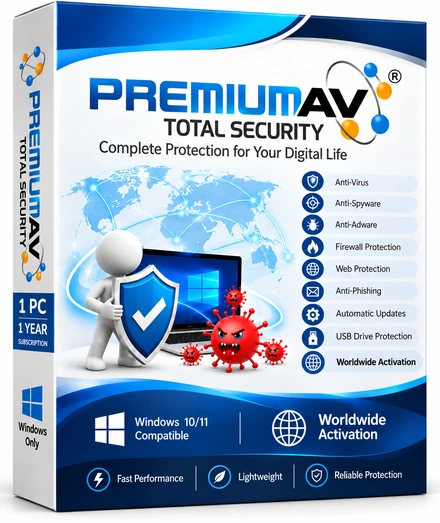
Buying endpoint security should start with two clear answers: which devices need protection, and what can the software do today? For a small business, those answers matter more than a long list of impressive feature names. You need a manageable bill, a realistic deployment plan and a way to review detections without guessing what your licence covers.
PremiumAV Enterprise uses a simple annual rate: Rs399 per endpoint in India, or USD 5 per endpoint outside India. The site selects the local currency automatically. This guide explains the licensing model, shows practical budgets and describes the current product scope so Indian and global buyers can make an informed decision.
What is an endpoint?
An endpoint is an individual device that connects to your business systems or holds business information. A receptionist's desktop, a travelling employee's laptop and a shared workstation are all endpoints. A server is also an endpoint in licensing terms, although the operating system and workload still need explicit product support.
Count devices rather than people. If one employee uses two computers, that is two endpoints. If three employees share one computer across shifts, that is one endpoint. This distinction makes a per endpoint antivirus licence easier to map to an equipment list.
For example, a small design office might have eight laptops and two shared desktops. Its inventory contains ten endpoints even if it employs twelve people. Write down each device, its operating system, who looks after it and whether it holds sensitive files. That simple register is the starting point for both purchasing and rollout.
Why per-endpoint licensing is easier to manage
Traditional antivirus buying can involve separate user counts, server counts and edition rules. The problem is not just arithmetic. A shared device may have several users, while a single user may have multiple devices. Unless the licence definition is clear, comparing two offers can produce misleading totals.
Per-endpoint licensing connects one licence to one device. You can reconcile the purchase against your inventory, explain it to finance and update the count when equipment changes. It is particularly useful for shared PCs, small offices and teams whose device count differs from their headcount.
This model is simpler for many businesses, but it is not automatically cheaper in every possible contract. Compare the full device allowance, term and supported systems. A low per-user price may cover several devices, while another offer may cover only one. The useful comparison is the cost of protecting your actual supported estate.
| Licensing approach | What you count | Question to resolve before buying |
|---|---|---|
| Per endpoint | Individual devices | Is each operating system supported? |
| Per user | People with access | How many devices does each user licence allow? |
| Per server | Server instances or machines under the contract | Which server roles and workloads are covered? |
PremiumAV also offers Per Server and Per User selections at the same rate for procurement documents that require those terms. Changing the label does not make an unsupported platform supported. In particular, the current Enterprise matrix keeps Windows Server production support under qualification.
Endpoint security pricing with worked examples
PremiumAV publishes the annual unit rate directly: Rs399 per endpoint in India and USD 5 elsewhere. The Enterprise builder on the pricing page lets you choose the licence type, device count and one, two or three years. Its total is endpoints multiplied by years multiplied by the annual unit rate.
| Devices and term | India total | Outside India total |
|---|---|---|
| 1 endpoint, 1 year | Rs399 | USD 5 |
| 5 endpoints, 1 year | Rs1,995 | USD 25 |
| 10 endpoints, 1 year | Rs3,990 | USD 50 |
| 10 endpoints, 2 years | Rs7,980 | USD 100 |
| 25 endpoints, 1 year | Rs9,975 | USD 125 |
| 100 endpoints, 3 years | Rs119,700 | USD 1,500 |
These are licence calculations, not currency conversions. The India and international rates are separate regional prices. Check the currency and final amount displayed at checkout before paying. Enterprise terms use the stated multiplication; do not assume that a home-plan bonus also applies to a business order.
For a business antivirus India price comparison, put device count, years and included capabilities on the same sheet. Record any separately quoted deployment, migration or managed response work. A published software licence price helps budgeting, but it does not imply that every professional service is included.
What PremiumAV Enterprise includes today
Start with the live Enterprise feature matrix. It identifies on-demand malware scanning and quarantine workflows on supported workstations as Included. Local accessible-file scanning, detection review and quarantine are concrete functions you can evaluate during a controlled trial.
The pricing page also describes the web management console, desired-policy configuration, stored-data reports, account and licence management, and signed definition updates. Read those descriptions literally. A console can store a desired setting without proving that every enrolled endpoint has applied it. A report based on stored data is different from continuous, fully qualified telemetry across an estate.
The matrix marks broader capabilities In final testing; these are not yet qualified for production. These include fleet-wide deployment and command acceptance, peripheral and content-aware DLP, mobile protection, production Server support, managed patch deployment, cloud application protection and continuous XDR. They should not be treated as currently delivered protection when preparing a purchase justification.
This distinction is useful for endpoint protection for small business. Choose on the basis of the functions you can use and verify now. If your purchase depends on a particular enforcement action or platform, ask PremiumAV to confirm the exact delivered scope before committing to a rollout.
A practical buying checklist for a small business
Begin with an inventory you can maintain. Include office PCs, remote laptops and shared workstations. Separate unsupported or unconfirmed systems so they do not silently disappear from your security plan. Assign an owner to review the register when staff join, leave or replace equipment.
Next, select a small representative pilot. Include a normal office machine and a device that runs your most important business application. Review installation requirements, scan behaviour, definition freshness and how detections appear. Use documented harmless test procedures rather than downloading live malware to a working office computer.
Write down who reviews alerts and who can approve remediation. Quarantine is useful only when someone understands why a file was isolated and whether restoring it is appropriate. Keep a support contact and a record of any exclusions you approve, including their business reason and review date.
Finally, keep independent backups and test a restore. Endpoint software is one layer in a wider system that includes operating-system updates, sensible access permissions and staff awareness. A licence purchase should fit that system rather than replace its other parts.
Making direct, transparent pricing useful
An open unit price shortens the first stage of procurement. A five-device shop and a growing office can calculate a baseline without arranging several quote calls. It also makes internal approval easier: the person approving the spend can reproduce the calculation.
Transparency still requires careful reading. Check whether an offer is annual or monthly, whether the term shown is the amount you pay now, and whether renewal conditions are stated. Many vendors package extra services into different tiers, so similar product names can hide different scopes.
For PremiumAV, keep the builder total together with the relevant product description and order details. If your business needs a purchase order, specific licence wording or confirmation of a deployment requirement, resolve that before payment. Clear records prevent a cheap-looking quote from becoming an expensive misunderstanding later.
Can a missing feature be developed for you?
PremiumAV invites customers to explain a feature they need and how they intend to use it. First-time feature development is free if it is technically possible: the team will try to build it at no extra cost, with the result included in the subscription.
A useful request describes the business task, affected devices, expected behaviour and a way to verify success. For example, describe the report fields your administrator needs rather than simply asking for “better reporting.” Avoid sending customer records or confidential files when a redacted example will explain the requirement.
This offer is a development commitment to assess and try a feasible request, not a promise that every idea will ship or meet an unspecified deadline. Confirm feasibility, acceptance criteria and timing with the team. Do not rely on an unbuilt feature for a mandatory security requirement.
Frequently asked questions
Is one licence enough for a shared office PC?
Under the per-endpoint model, one licence covers one device, even if several people share it. If the same person uses a second computer, count that second device separately. Confirm installation compatibility for each machine before purchasing.
Can I mix desktops, laptops and servers in one count?
The licensing concept counts devices without separate user and server arithmetic. Product support is a separate question: the current PremiumAV matrix keeps production Windows Server support under qualification. Confirm supported systems and rollout scope before including a server in an operational deployment.
What does ten endpoints for two years cost?
The licence calculation is Rs7,980 in India or USD 100 outside India. It is ten devices multiplied by two years multiplied by Rs399 or USD 5. The site automatically selects the regional currency and checkout shows the final payable amount.
Does the Enterprise licence include fully qualified DLP or XDR?
The live matrix marks those broader capabilities In final testing; they are not yet qualified for production. Do not infer deployed blocking, continuous telemetry or automated response from an available console or setting. Use the matrix to distinguish current workstation scanning and quarantine from capabilities awaiting qualification.
Is first-time feature development really free?
PremiumAV says the first-time development is free if technically possible and the team will try to include it in your subscription. Submit the use case and agree on scope. Feasibility and delivery timing need confirmation before you depend on the requested function.
Choose a clear licence and a realistic scope
Good endpoint security buying joins a simple budget to a precise understanding of the product. Count the devices, read current capability statuses and establish who will operate the software. That approach works for a local Indian business and for a distributed team buying internationally.
Review PremiumAV Enterprise for the full matrix, then use the Enterprise plan builder to select your count and term. If you need a capability beyond the current included scope, contact the team before you build your rollout around it.